Questions & Answers
Frequently Asked Questions
Real questions from Midlothian-area homeowners about foundation repair, basement waterproofing and crawl space work — with straight, plain-language answers. Don't see your question? Reach out or call (804) 635-3006.
What is the average price to encapsulate a crawl space?
There's no single average because every crawl space is different — the size, how much standing water or mold is present, whether vents need sealing, and whether a dehumidifier and insulation are included all change the price. That's why we give a free, itemized quote after an inspection instead of a number over the phone. You'll see exactly what's included before any work starts.
Is crawl space encapsulation worth it?
For most Midlothian-area homes with a vented dirt crawl space, yes. Encapsulation controls the humidity that causes musty smells, mold, soft floors and high energy bills, and it helps protect the wood structure of your home. In our humid climate, it tends to pay off in comfort, air quality and preventing much bigger repairs down the road.
Why is my sump pump running nonstop?
A pump that runs constantly usually has one of a few causes: a stuck float switch that never tells the pump to stop, a failed check valve letting water flow back into the pit, a discharge line that's clogged or dumping water too close to the house so it cycles right back, or a genuinely high water table. We inspect to find which one it is, because each has a different fix — and ignoring it can burn out the pump motor.
Is a basement wall crack serious?
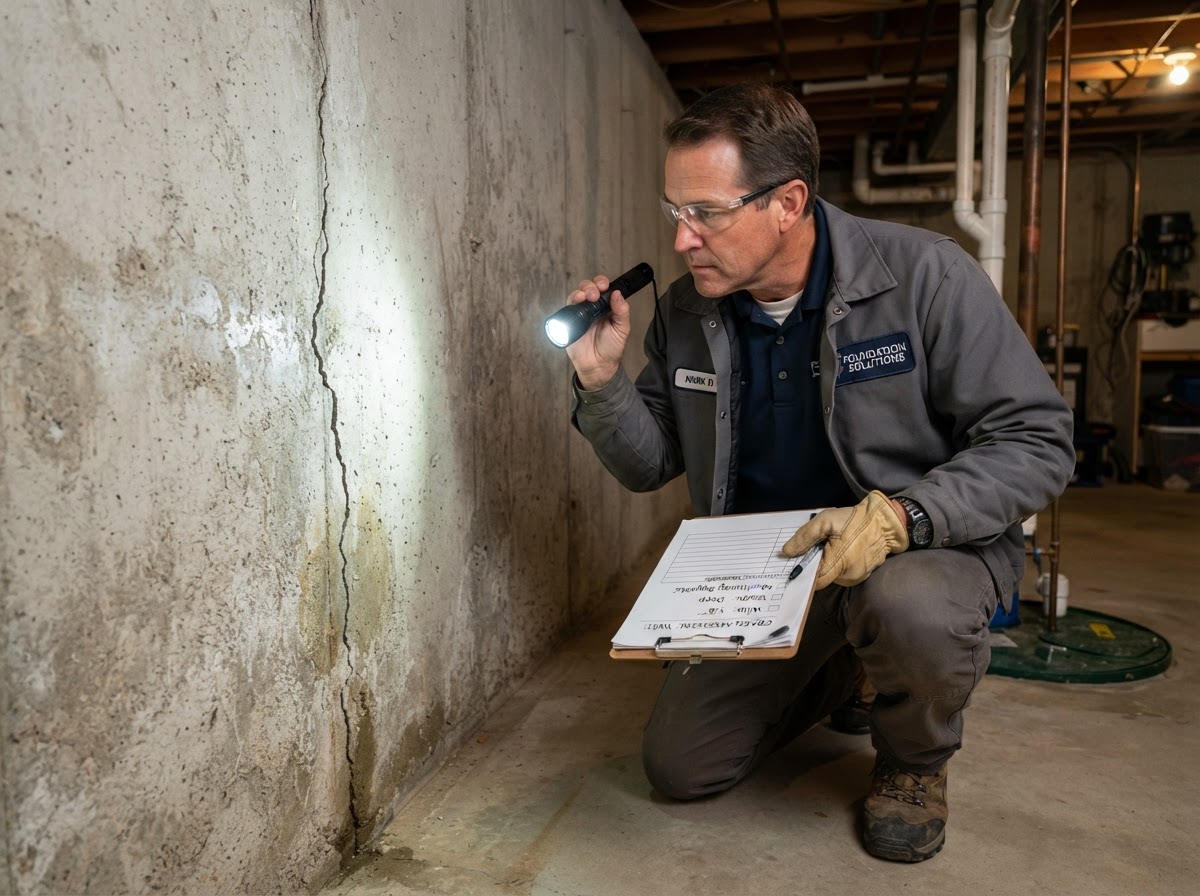
It depends on the crack. Thin vertical cracks are often just concrete shrinkage and usually low-risk. Diagonal cracks can point to settling at a corner. Horizontal cracks are the ones to take seriously — they often mean wet soil is pushing the wall inward and it's starting to bow. Any crack that's widening, leaking, or paired with sticking doors or sloping floors should be inspected promptly.
Why does my basement leak after heavy rain?
Heavy rain saturates the soil around your foundation and builds hydrostatic pressure, forcing water through the floor-wall joint, cracks and porous concrete. It's a drainage and waterproofing problem, not a one-time leak. The fix is usually an interior drainage system tied to a working sump pump, sometimes with exterior waterproofing or grading fixes.
Is foundation settling normal?
Some minor settling is normal as a home ages, but uneven or ongoing settling that cracks walls, slopes floors or sticks doors is not something to ignore. In our clay soils, the ground swells when wet and shrinks when dry, which can push a foundation up and down over time. We inspect to tell the difference between cosmetic movement and a problem that needs piers.
Can a bowing basement wall be fixed without replacing it?
Yes, in most cases. Bowing walls are usually pushed inward by wet soil pressure, and they can often be stabilized and even pulled back with wall anchors, steel braces or carbon fiber reinforcement — without tearing the wall out. How urgent it is depends on how far the wall has moved, so it's worth having it looked at promptly.
Do you charge for estimates?
No. Our estimates and inspections are free and carry no obligation. We'll come look at your home, tell you honestly what's going on, and give you a clear, itemized quote if anything needs fixing. If your home is fine, we'll tell you that too — no pressure.
Ready to Protect Your Home?
Get a fast, no-obligation estimate from a local Midlothian crew that tells it to you straight.
Still Have Questions?
The best way to get a straight answer about your specific home is a free inspection. Tell us what you're seeing and we'll take a look — no obligation.
Or call us at (804) 635-3006.