Midlothian's Local Foundation & Waterproofing Specialists
Foundation Settling Repair in Midlothian, VA
Call for a free estimate:(804) 635-3006
Foundation Settling Repair overview
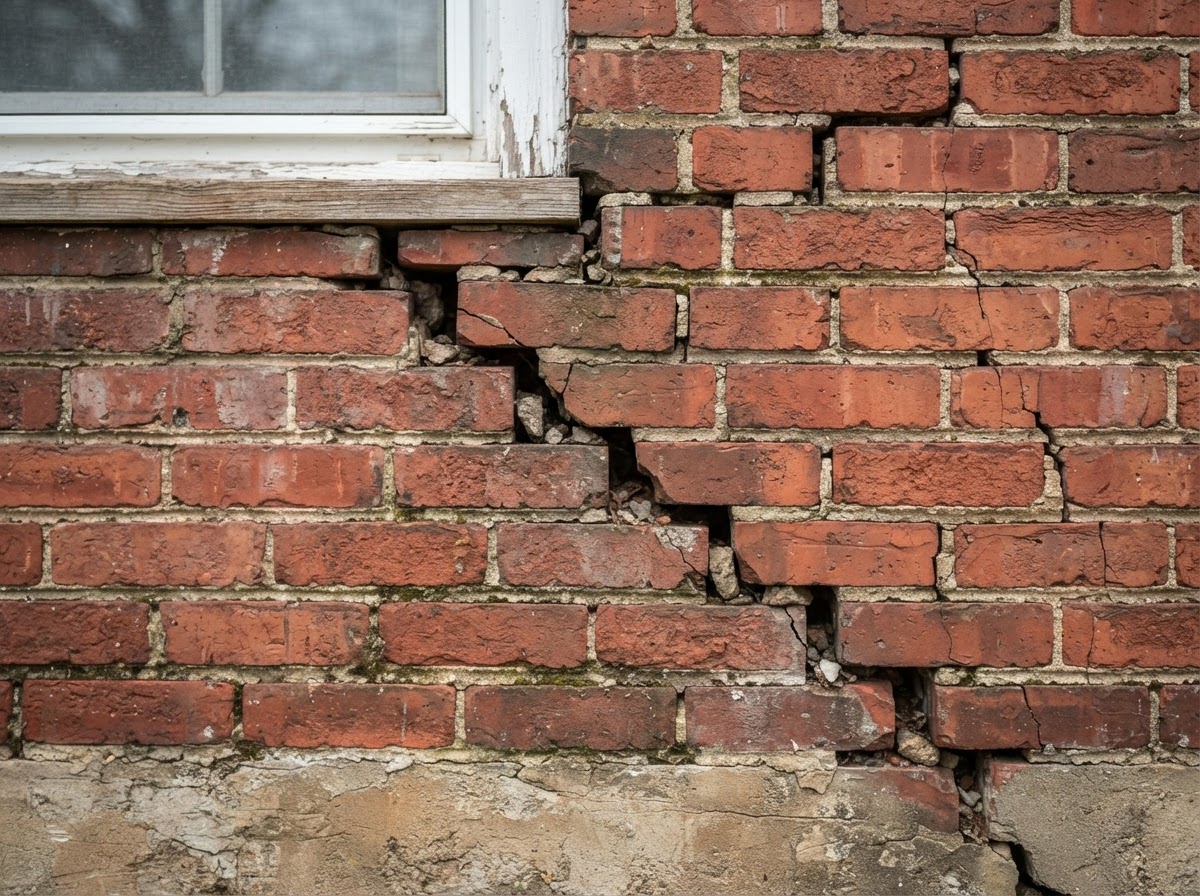
Foundation settling is when a home sinks unevenly into the ground over time. You might notice floors that slope or bounce, doors and windows that stick or won't latch, stair-step cracks in brick or block, drywall cracks around doors and windows, or gaps opening at trim. We diagnose what's causing the movement and stabilize the home — most often with piers that transfer the load to deeper, more stable soil — so the settling stops and, where possible, the home is lifted back toward level.
Proud to Serve Midlothian & the Chesterfield–Tri-Cities area
We bring foundation settling repair to homeowners across Midlothian and the surrounding communities.
What's Included
Settling diagnosis
We figure out whether your cracks are cosmetic or structural, and what's driving the movement underneath.
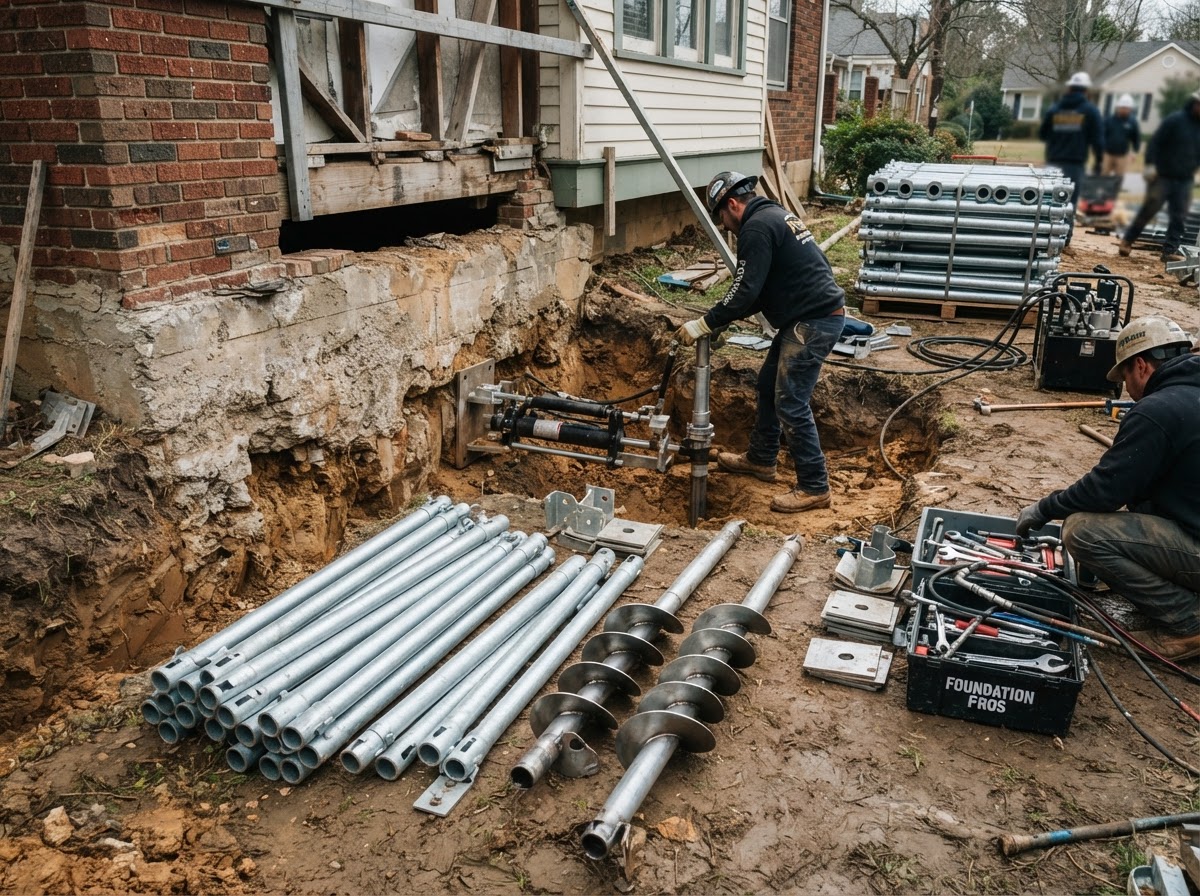
Push pier & helical pier installation
We drive piers to competent soil or bedrock and transfer the foundation's load off the unstable surface soils.
Lift & stabilization
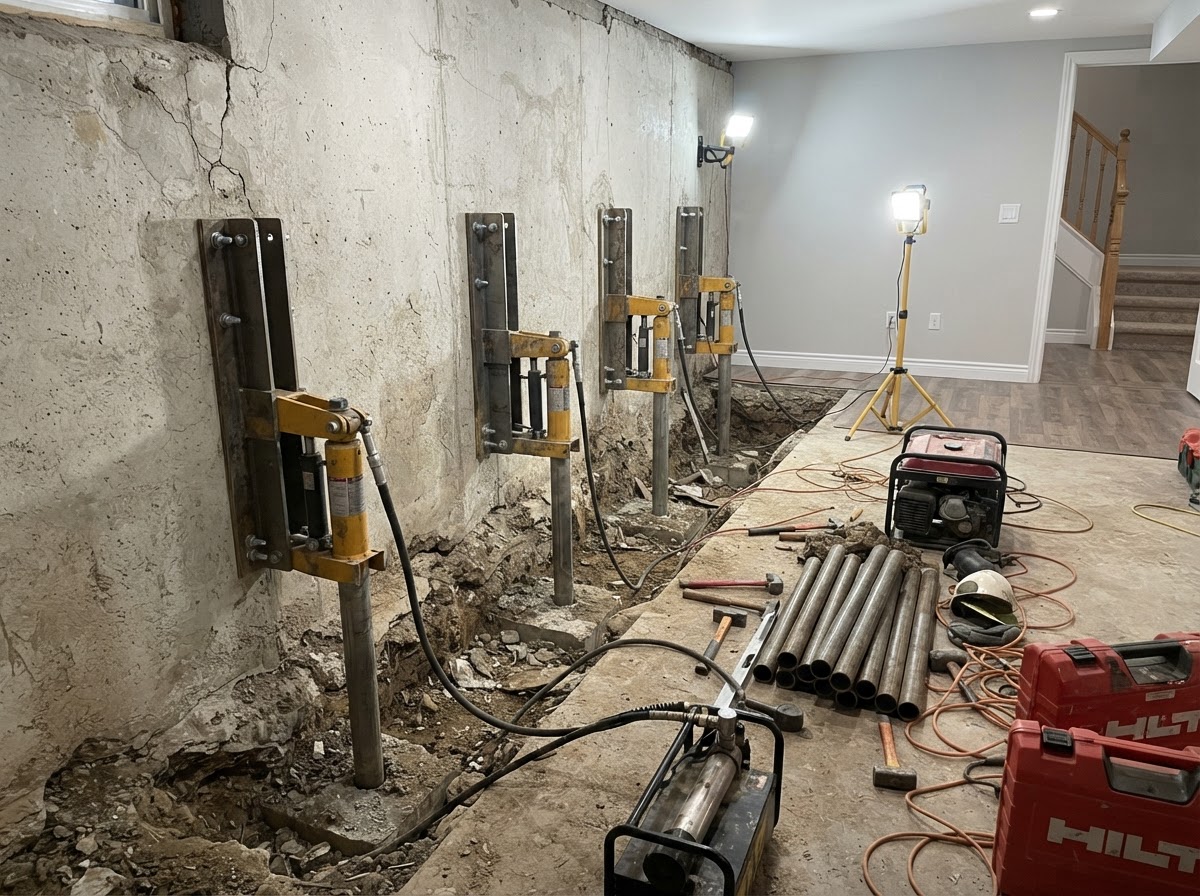
Where conditions allow, we carefully lift the settled area back toward level and lock it in place.
Crack monitoring & repair
We address the cracks the settling caused and can help you tell if movement is ongoing.
Why This Happens in Midlothian
Most settling in our area comes down to the soil. Midlothian straddles the Fall Line: to the west, in Midlothian and Powhatan, heavy Piedmont red clay dominates; to the east, toward Chester, Hopewell, Colonial Heights and Prince George, you get sandier Coastal Plain soils and higher water tables. Clay soils swell when they're wet and shrink when they're dry, so the ground under a foundation literally expands and contracts with the seasons.
With 40+ inches of rain a year and dry stretches in between, that cycle pushes a foundation up and down repeatedly until weaker sections start to sink away from the rest. Poor drainage, downspouts that dump water next to the foundation, soil that wasn't properly compacted at construction, and Midlothian's long coal-mining history — which left voids and mixed fill under parts of the area — all make settling more likely. The result shows up above as the cracks, sloping and sticking that homeowners notice first.
How to Help Prevent It
Manage water around the foundation: keep gutters clear and add downspout extensions so water doesn't pool and soak the soil next to the house.
Grade the soil so it slopes away from the foundation, carrying rainwater off instead of letting it saturate the ground underneath.
Watch for early warning signs — hairline drywall cracks, doors that start to stick, small gaps at trim — and have them checked before they grow.
Avoid letting the soil right at the foundation go through extreme wet and dry swings; consistent, moderate moisture is gentler on clay than flood-then-drought.
Cost Guide
Every home and every repair is different, so we price from a real inspection — never a guess over the phone. Here's what shapes the cost.
| Repair type | Typical price range | What affects the cost |
|---|---|---|
| Foundation inspection & diagnosis | Free quote after inspection | Determines whether movement is cosmetic or structural and what's causing it. |
| Push pier installation | Free quote after inspection | Number of piers, depth to stable soil, and how much of the home is involved. |
| Helical pier installation | Free quote after inspection | Used in lighter structures or specific soils; priced per pier and depth. |
| Lift & stabilization | Free quote after inspection | Extent of lift possible, access, and whether interior finishes need protection. |
Why Choose Us for Foundation Settling Repair
We diagnose before we dig
We confirm the cause and whether piers are truly needed before recommending them — not every crack means piers.
Piers matched to your soil
We choose push or helical piers based on what's actually under your home, east or west of the Fall Line.
Careful, clean work
We protect your landscaping and finishes, and clean up thoroughly when the job is done.
Ready to Protect Your Home?
Get a fast, no-obligation estimate from a local Midlothian crew that tells it to you straight.
Our Process
Inspection
We walk the interior and exterior, measure floors and cracks, and identify the cause of the settling.
Plan & quote
You get a clear pier plan, where they'll go, and an itemized quote — with honest input on whether you need them.
Pier installation
We excavate small access pits, drive piers to stable soil, and transfer the foundation's load down.
Lift & finish
We lift where possible, lock the foundation in place, backfill, and clean up the site.
Is foundation settling normal?
Some minor settling is normal as a home ages, but uneven or ongoing settling that cracks walls, slopes floors or sticks doors is not something to ignore. In our clay soils, the ground swells when wet and shrinks when dry, which can push a foundation up and down over time. We inspect to tell the difference between cosmetic movement and a problem that needs piers.
How do you fix a settling foundation?
The most common structural fix is installing piers — push piers or helical piers — that are driven down past the unstable surface soil to competent soil or bedrock. The home's weight is then transferred onto the piers so it stops sinking, and the settled section can often be lifted back toward level. The right pier type depends on your soil and the structure.
Are stair-step cracks in brick serious?
They can be. A stair-step crack following the mortar lines in brick or block often signals that one side of the wall has dropped relative to the other — a classic sign of settling. Small, old hairline cracks may be stable, but widening cracks, cracks that line up with sticking doors or sloping floors, or cracks that keep growing should be inspected promptly.
Can a settled foundation be lifted back?
Often, yes. Once piers are in place and carrying the load, the settled section can frequently be lifted back toward its original position — though we always do this carefully to avoid stressing the home. How much lift is possible depends on the structure, the finishes, and how long it's been settling.
Our Other Services
Need more than one thing? We handle the full range of foundation, basement and crawl space work.
Get Your Free Estimate
Tell us what you're seeing and we'll call you back quickly to schedule a no-obligation inspection. No pressure — just a straight answer about your home.
Prefer to call? Reach us at (804) 635-3006.