Midlothian's Local Foundation & Waterproofing Specialists
Sump Pump Repair in Midlothian, VA
Call for a free estimate:(804) 635-3006
Sump Pump Repair overview
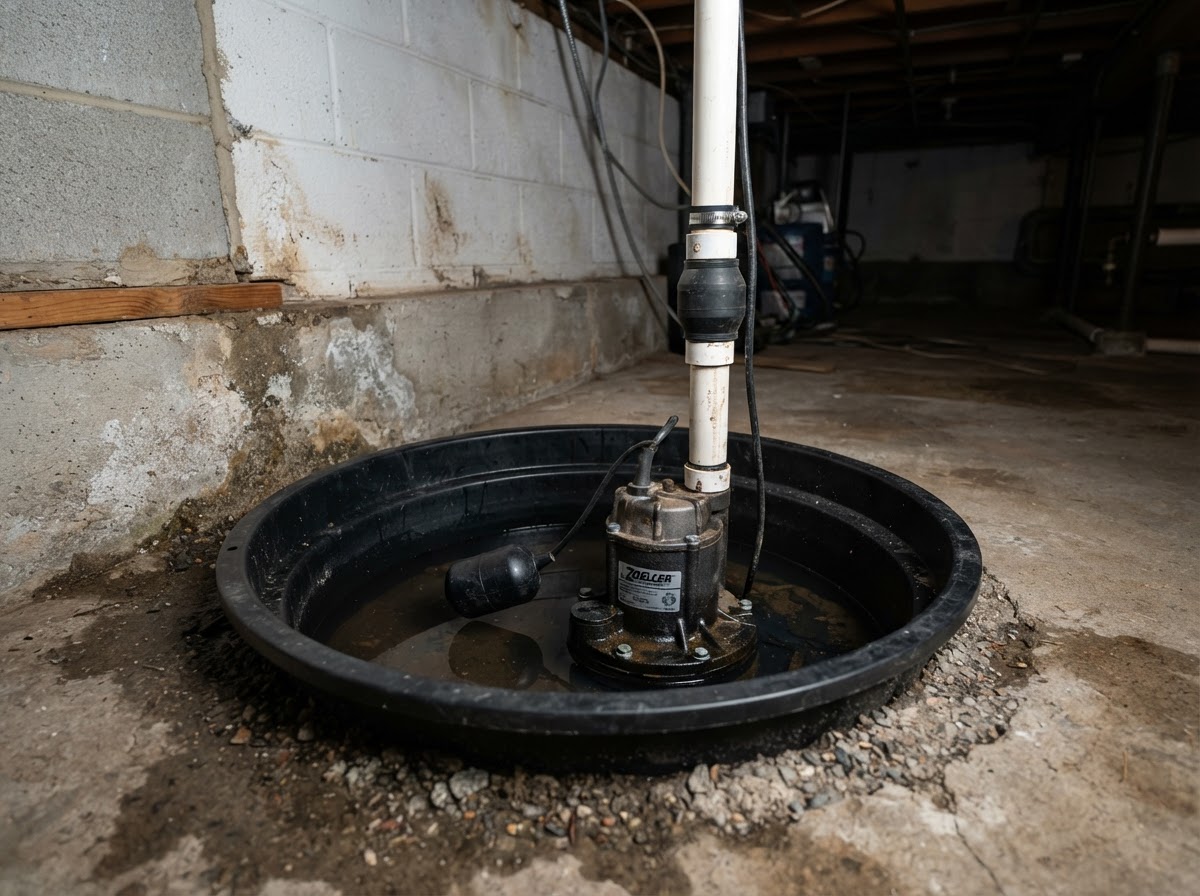
A sump pump is the last line of defense between your basement and a flood. When it won't start, runs nonstop, cycles every few minutes, makes a grinding noise or has simply died, water has nowhere to go. We repair and replace sump pumps across Midlothian and the surrounding area — fixing float switches, check valves, discharge lines and battery backups, and telling you honestly whether your pump can be saved or it's time for a new one.
Proud to Serve Midlothian & the Chesterfield–Tri-Cities area
We bring sump pump repair to homeowners across Midlothian and the surrounding communities.
What's Included
Pump diagnosis & repair
We figure out why your pump won't start, won't stop, or cycles constantly, and repair the actual cause instead of guessing.
Float switch & check valve service
Stuck, tangled or failed float switches and worn check valves are the most common pump problems — we replace them properly.
Discharge line repair
A pump is only as good as where it sends water. We clear, reroute or replace frozen, clogged or poorly pitched discharge lines.
Battery backup systems
Storms knock out power right when you need a pump most. We install and service battery backups that keep running in an outage.
New pump installation
When a pump has failed for good, we size and install a replacement matched to your basement and your water load.
Why This Happens in Midlothian
Sump pumps in the Midlothian area work hard. With 40+ inches of rain a year and humid summers with heavy storms, the water table around your foundation rises fast, and your pump can switch on dozens of times a week. East of the Fall Line, toward Chester, Hopewell, Colonial Heights and Prince George, sandier Coastal Plain soils and higher water tables mean pumps run even more.
Most pump failures aren't the motor burning out — they're mechanical. Float switches get jammed against the basin wall or tangled in the cord, check valves fail and let water slam back into the pit, and discharge lines clog, freeze, or dump water too close to the house so it cycles right back in. Power outages during storms take out pumps at the worst possible moment, which is why a battery backup matters so much here.
How to Help Prevent It
Test your sump pump before storm season: pour a few buckets of water into the pit and confirm the float lifts, the pump kicks on, and the water actually leaves the house through the discharge line.
Make sure your discharge line outlets at least several feet from the foundation and pitches away from the house, so you're not pumping the same water back in.
Keep the pit clear of debris that can jam the float, and consider a battery backup if you don't already have one — storms and power outages tend to arrive together.
If your pump is running constantly or cycling every few minutes even in dry weather, don't wait for it to burn out — have it checked before the next big rain.
Cost Guide
Every home and every repair is different, so we price from a real inspection — never a guess over the phone. Here's what shapes the cost.
| Repair type | Typical price range | What affects the cost |
|---|---|---|
| Float switch / check valve repair | Free quote after inspection | Parts and labor; depends on access and whether the pit needs cleaning. |
| Discharge line repair or reroute | Free quote after inspection | Length of run, buried vs. above grade, and how far it must carry water away. |
| Battery backup installation | Free quote after inspection | Backup unit, battery size, and whether a second pump is added. |
| New sump pump installation | Free quote after inspection | Pump capacity (HP), basin size, and whether the existing pit and plumbing are reused. |
Why Choose Us for Sump Pump Repair
We fix the cause, not the symptom
A pump that cycles constantly usually has an upstream cause. We find it instead of just swapping parts.
Honest repair-vs-replace advice
If your pump can be saved for less, we'll say so. If it's time for a new one, we'll tell you why.
Storm-ready backups
We install battery backups sized for real Midlothian storm conditions, not a best-case scenario.
Ready to Protect Your Home?
Get a fast, no-obligation estimate from a local Midlothian crew that tells it to you straight.
Our Process
First call
Tell us what your pump is doing. We'll ask a few quick questions and schedule a visit.
Inspection
We check the pump, float, check valve, discharge line and pit, and show you what we find.
Straight recommendation
You get a clear repair-vs-replace recommendation and an itemized quote — no pressure.
Repair or install
We do the work cleanly, test the pump with water, and confirm it discharges properly.
Why is my sump pump running nonstop?
A pump that runs constantly usually has one of a few causes: a stuck float switch that never tells the pump to stop, a failed check valve letting water flow back into the pit, a discharge line that's clogged or dumping water too close to the house so it cycles right back, or a genuinely high water table. We inspect to find which one it is, because each has a different fix — and ignoring it can burn out the pump motor.
Should I repair or replace my sump pump?
It depends on the failure and the pump's age. A failed float switch or check valve is usually a quick, affordable repair. A motor that's burned out, a cracked housing, or a pump that's already been repaired once and is still struggling is usually better replaced. We'll show you what we find and give you an honest recommendation either way.
Do I really need a battery backup?
In this area, yes. The storms that dump the most water on your foundation are the same storms most likely to knock out power, and a pump without power can't protect anything. A battery backup keeps the pump running through an outage, which is exactly when you need it most.
How often should a sump pump be tested?
Test it at least twice a year — once in spring before storm season and once before winter. Pour water into the pit and confirm the pump kicks on and the water actually leaves the house. It takes two minutes and catches most problems before they become a flooded basement.
Our Other Services
Need more than one thing? We handle the full range of foundation, basement and crawl space work.
Get Your Free Estimate
Tell us what you're seeing and we'll call you back quickly to schedule a no-obligation inspection. No pressure — just a straight answer about your home.
Prefer to call? Reach us at (804) 635-3006.